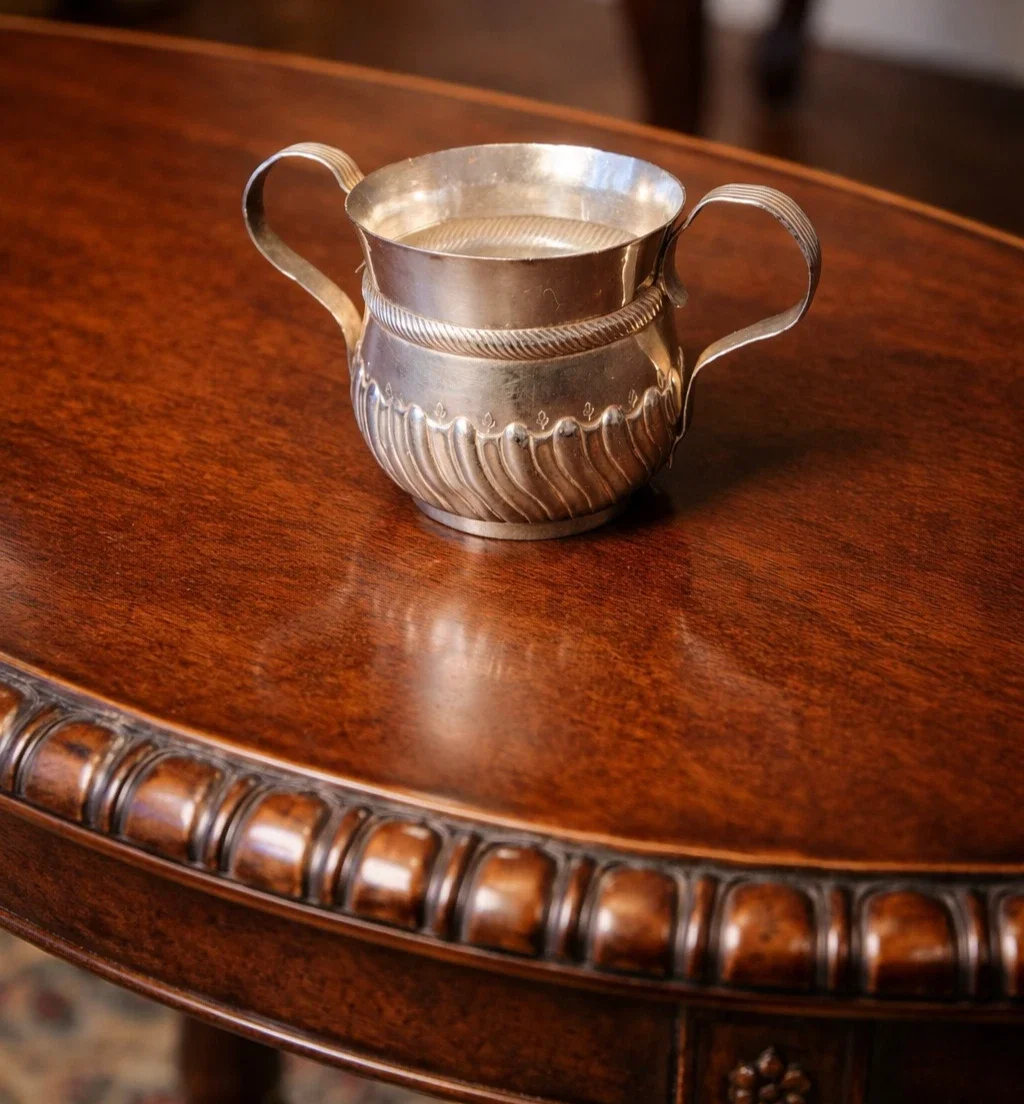
Queen Anne Silver
Queen Anne silver refers to a style of English silverware made during the reign of Queen Anne (1702–1714). It’s one of the most elegant and collectable periods in antique silver.
What it looks like
Queen Anne silver is known for its refined simplicity compared to earlier, more ornate styles. Key features include:
Plain, smooth surfaces with minimal decoration
Elegant proportions and balanced shapes
“Rat-tail” spoons (a ridge strengthening the bowl handle join)
Octagonal or tapering forms (especially tankards and mugs)
Subtle engraving rather than heavy embossing
Britannia standard
One of the most important things about Queen Anne silver is the use of the Britannia silver standard:
95.8% pure silver (higher than modern sterling at 92.5%)
Introduced to discourage melting coins
Marked with a figure of Britannia instead of the lion passant
This makes genuine Queen Anne pieces softer and slightly warmer in tone than later sterling silver.
Common items
Typical pieces you’ll find include:
Tankards (very popular in this period)
Porringers (small bowls with handles)
Casters (for sugar/spices)
Spoons and early forks
Tea wares (as tea drinking became fashionable)
Why collectors love it
It represents a transition to modern design
Pieces are over 300 years old
High silver purity adds value
Craftsmanship is subtle but extremely refined
Value (rough guide)
Prices vary widely depending on maker, condition, and rarity:
Small items (spoons, etc.): £100–£500+
Tankards or larger pieces: £2,000–£20,000+
Rare or museum-quality items: much higher