
What is "Art Deco"
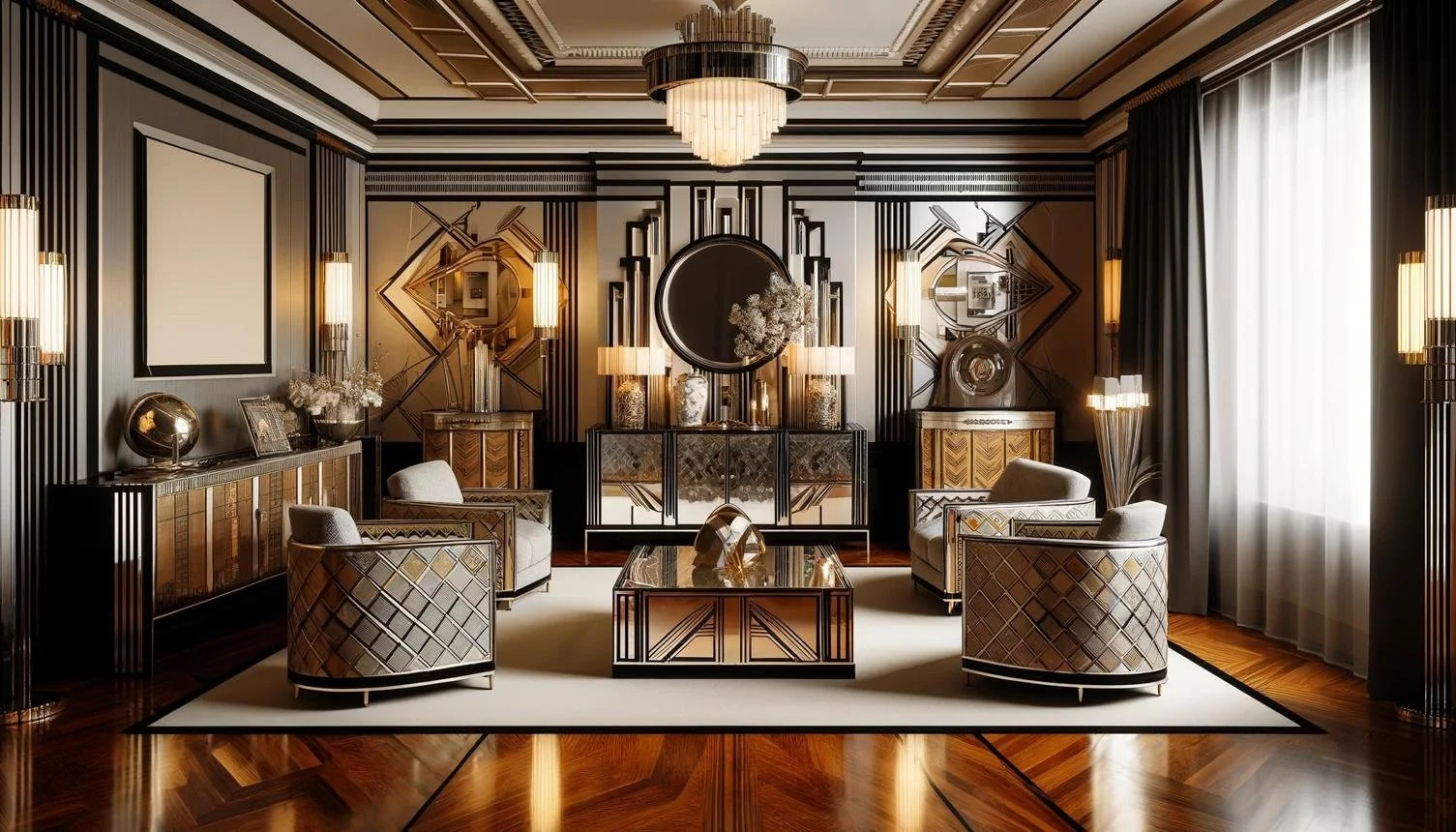
Art Deco is a design style that emerged in the 1920s and 1930s, known for its bold geometry, rich materials, and sense of modern luxury. It touched everything—from buildings and furniture to fashion, jewelry, and graphic design.
Origins
The style takes its name from the Exposition Internationale des Arts Décoratifs et Industriels Modernes, a major exhibition in Paris that showcased a new, forward-looking aesthetic. It spread globally during the interwar period.
Key Characteristics
Art Deco is easy to recognize once you know what to look for:
Geometric shapes: zigzags, chevrons, sunbursts, and stepped forms
Symmetry: balanced, orderly designs
Luxurious materials: chrome, glass, ivory, lacquer, exotic woods
Bold colors: deep blacks, golds, jewel tones
Streamlined forms: influenced by machines, speed, and progress
Famous Examples
The Chrysler Building in New York is one of the most iconic Art Deco skyscrapers, with its gleaming, layered crown.
The Empire State Building also reflects the style in a more restrained way.
Art Deco vs. Other Styles
Art Nouveau (earlier): flowing, organic lines inspired by nature
Art Deco: sharp, geometric, machine-inspired
Mid-century modern (later): simpler, more functional, less decorative
Why It Still Matters
Art Deco continues to influence modern design—especially in luxury goods (like brands such as Asprey), architecture, and interiors—because it represents a moment when craftsmanship met modernity.