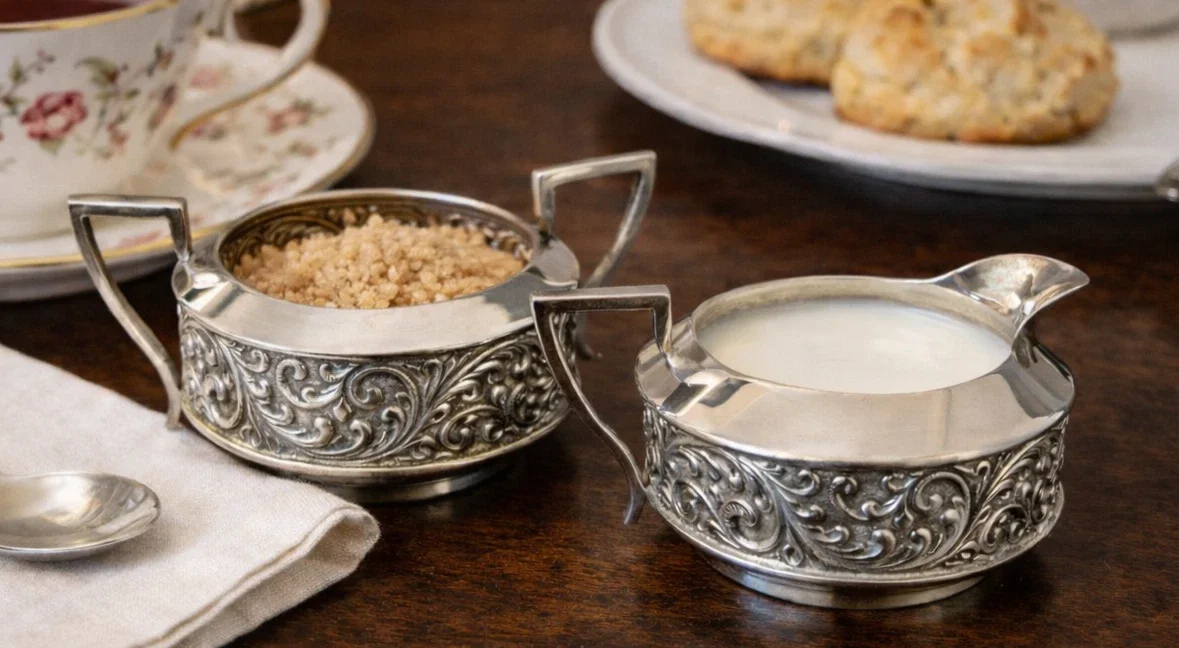
What is Antique Silver
Antique Silver: what it actually means
Antique silver refers to silver objects that are at least 100 years old. These items were usually made for practical or decorative use—things like cutlery, teapots, candlesticks, or jewellery—and have survived long enough to become collectable.
🕰️ How old is “antique”?
Generally, an item must be 100+ years old to be called an antique.
So today, that includes silver from periods like:
Georgian (1714–1830)
Victorian (1837–1901)
Early Edwardian (1901–1910)
🧪 What is it made of?
Most antique silver isn’t pure silver. Instead, it’s usually:
Sterling silver (92.5% silver, 7.5% other metals like copper)
Occasionally coin silver (slightly lower purity, common in older pieces)
🔍 How to recognise antique silver
1. Hallmarks
Small stamped symbols that tell you:
Purity
Maker
Year and place of manufacture
British silver often has very detailed hallmark systems.
2. Craftsmanship
Often handmade or hand-finished
Fine engraving, chasing, or embossing
3. Patina
A soft, darker tone that forms naturally over time
Unlike dirt, this is valued and usually not polished away completely
💰 Why people collect it
Historical value – each piece reflects its era
Artistry – often more detailed than modern mass production
Investment – value can increase over time
⚠️ Not the same as…
Vintage silver: typically 20–99 years old
Silver-plated items: only a thin layer of silver over another metal (less valuable)
In short
Antique silver is real silverware or objects over a century old, prized for their craftsmanship, history, and character—especially the unique marks and patina they develop over time.